-
 EN
EN
 Deutsch

Lift Tables
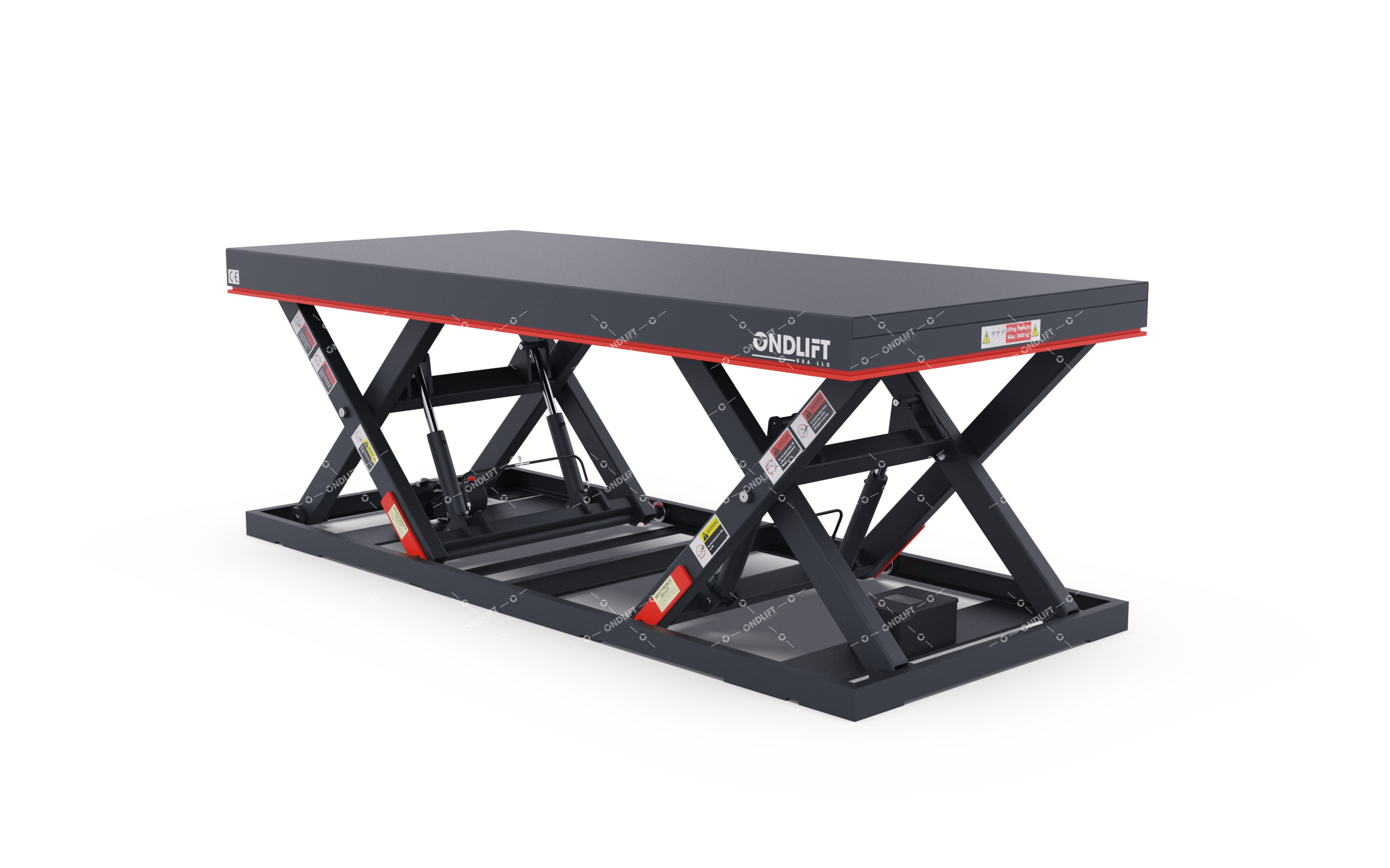
Lift tables are mechanical platforms that raise or lower loads, typically via scissor mechanisms, hydraulic or ball-screw drives, or other actuator systems. They enable safer, more ergonomic, and more efficient material handling in production lines, warehouses, workshops, logistics centers, and many other industrial environments.




Lift Tables


Lift Tables — Efficient & Robust Solutions for Material Handling
What Are Lift Tables?
Lift tables are mechanical platforms that raise or lower loads, typically via scissor mechanisms, hydraulic or ball-screw drives, or other actuator systems. They enable safer, more ergonomic, and more efficient material handling in production lines, warehouses, workshops, logistics centers, and many other industrial environments.
Key Types & Variants
Below are several popular types of lift tables, each suited for different use cases:
Single Scissor Lift Table
A classic scissor mechanism for vertical lift. Ideal for moderate lift heights and payloads.
Double Scissor Lift Table
Two scissor sets in tandem allow higher lift heights or greater stability under heavier loads.
High Scissor Lift Table
Designed for especially tall lifting applications, for example to transfer loads between floors or mezzanines.
Tandem Lift Table
Multiple lift units positioned in tandem to distribute heavier loads over a larger footprint.
Stainless Steel Lift Table
Made of corrosion-resistant materials—ideal for food, pharmaceutical, or clean-room environments.
Low Profile / Super Low Profile Lift Table
Minimal collapsed height, enabling loading/unloading at near-floor level or integration in pit installations.
U-Type Low Profile Lift Table
A low-profile table with a U-shaped cut-out to allow passage of forklift forks or other loaders.
Car Lift Table / Car Lift Table with Driver on Board
Platforms designed to lift vehicles or allow an operator to ride along—useful in automotive servicing or vertical parking systems.
Disabled / Platform Lift
Lift systems for people with disabilities, providing safe vertical transport between levels.
Loading Dock / Dock Lift Table
Heavy-duty lift tables suited for loading docks, allowing trucks and pallets to be matched in height.
Mobile Scissor Lift Table
Portable units that can be moved on casters or wheels, offering flexibility in layout changes.
Tilt Table / Lift & Tilt Table
Combines lifting with tilting motion, useful for ergonomic loading/unloading or positioning of parts.
Arm Lift / Low Profile Arm Lift
Uses arms rather than scissors—advantageous in constrained vertical spaces or when the platform must remain flat while moving.
Ball Screw Lift Table
A high-precision drive mechanism using ball screws—good for exact positioning and repeatable motion.
AGV/AMR Integrated Lift Table
Lift tables integrated with Automated Guided Vehicles (AGVs) or Autonomous Mobile Robots (AMRs) to automate material transfer.
Goods Lifts (Single, Double, Four Column, Attended)
Vertical lifts for goods, with varying numbers of columns depending on load, footprint, and structural needs.
Advantages & Applications
- Ergonomics & Safety: Reduce bending, stretching, and manual lifting to protect workers and improve throughput.
- Flexibility: Many models can be tailored (size, travel, load capacity, drive type) to specific site requirements.
- Space Efficiency: Low-profile and pit-mountable units allow integration into floors or tight layouts.
- Corrosion Resistance: Stainless-steel models permit use in demanding environments (e.g. washdowns, hygiene-sensitive areas).
- Automation Compatibility: AGV/AMR integrated tables support automated workflows.
- Versatility: With variants like tilt, arm, or tandem units, lift tables adapt to many functional roles (loading, lifting, tilting, staging).
Choosing the Right Lift Table
When selecting a lift table, consider:
- Load Capacity & Size — How much weight must be lifted, and what dimensions does the platform need to cover?
- Lift Height / Travel Range — What vertical stroke is required?
- Drive Mechanism — Hydraulic, ball screw, pneumatic, or electric actuation each have pros and cons (speed, precision, maintenance).
- Footprint & Profile — Do you need a low collapsed height or pit installation?
- Environment — Is corrosion resistance, hygiene compliance, or washdown capability required?
- Mobility — Will the unit be stationary or movable?
- Integration — Does it need to work in tandem with conveyors, AGVs, or other automation systems?
- Safety Features — Include bumpers, safety skirts, overload protection, emergency stops, etc.
Why Partner with an Expert Provider
Working with a lift-table specialist ensures:
- Custom design and manufacturing to meet unique site constraints.
- Robust testing and safety certifications.
- Ongoing maintenance, spare parts support, and training.
- Integration with broader material handling systems or automation.